A CHATBOT AS A DEFENDANT
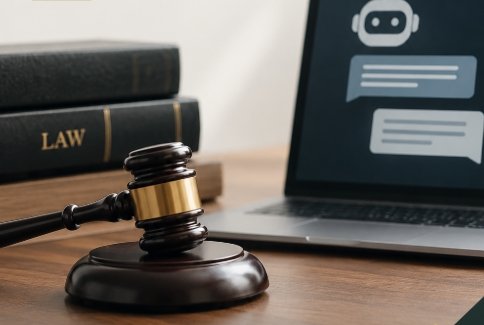
Can the company behind a chatbot be made to pay when a user relies on it to relitigate a settled dispute? In Nippon Life Insurance Co. of America v. OpenAI Foundation, pending in the Northern District of Illinois, an insurer says it can, and that ChatGPT engaged in the unauthorised practice of law. The answer matters to any business that settles disputes, buys AI tools or lets staff paste legal advice into them.
THE BACKGROUND
Generative AI now drafts a growing share of filings by self-represented litigants, and courts have responded by sanctioning the people who sign them. In July 2026, the Arizona Court of Appeals held that citing a hallucinated case is sanctionable whether or not the filer meant to mislead, and a California appellate court ordered self-represented appellants to pay their opponents’ fees over fabricated authorities. Those sanctions fall on the user, and the company whose tool produced the text has so far stayed outside the courtroom.
THE SETTLEMENT THAT WOULD NOT STAY SETTLED
Graciela Dela Torre sued Nippon Life over a long-term disability claim, settled in January 2024 and signed a release, and the case was dismissed with prejudice. A year later, she asked her lawyer about reopening it and was told the release foreclosed that. According to the complaint, she uploaded the correspondence to ChatGPT, which agreed that she had been misled, and she dismissed her counsel.
ChatGPT then drafted a motion to reopen, which the court denied. The complaint attributes at least 44 filings to the chatbot, including a citation to a case that does not exist, across this matter and a new suit filed on the same released claims.
WHAT NIPPON CLAIMS
Nippon sued OpenAI Foundation and OpenAI Group PBC in March 2026 for tortious interference with the settlement agreement, abuse of process and violation of the Illinois statute on the unauthorised practice of law. It seeks about $300,000 in compensatory damages, tied to the cost of defending a resolved case, $10 million in punitive damages and an injunction barring OpenAI from practising law in Illinois.
OpenAI moved to dismiss in May. It describes ChatGPT as a statistical tool that predicts the next word and cannot practice law, argues that interference requires active persuasion, and points to terms of use under which users agree not to treat output as professional advice. Nippon argues that a manufacturer is responsible for its product, and the motion was still pending at the last report.
CHATBOT OUTPUT AS A PRODUCT
Nippon’s theory borrows from the Character.AI litigation. In Garcia v. Character Technologies, a Florida federal court declined at the pleading stage to treat a chatbot’s output as protected speech and let product liability claims proceed so far as the alleged defects lay in design. Whether a chatbot is a product or a service delivering speech remains contested, and a trial-level ruling carries limited weight.
The constitutional question is also open. The Second Circuit held in Upsolve v. James that New York’s unauthorised practice rules, as applied to nonlawyers helping debtors complete a form, attract only intermediate scrutiny, and the Supreme Court denied review in March 2026. That court left open whether the same reasoning covers drafting pleadings, which is closer to what ChatGPT allegedly did.
LEGISLATURES TAKE NOTICE
New York Senate Bill S7263 would have barred chatbots from giving responses that amount to the unauthorised practice of a licensed profession, with private damages actions. It was narrowed in May 2026 into a measure enforced by the attorney general, directed at operators who knowingly let a chatbot pose as a licensed practitioner. Its sponsor’s memorandum describes a user who fired her lawyer and filed AI-generated motions to reopen a settled case, a scenario that closely tracks Nippon’s allegations.
OpenAI’s own usage policies, updated in October 2025, bar tailored advice that requires a license without a licensed professional’s involvement. That language supports the argument that reliance rests with the user, yet it concedes that the line between information and legal advice is real, which sits uneasily with a defence that ChatGPT performs no legal function.
PRIVILEGE AND UPLOADED ADVICE
Dela Torre’s first step, uploading her lawyer’s correspondence to a consumer chatbot, carries its own risk. In United States v. Heppner, Judge Rakoff held in February 2026 that a defendant’s exchanges with a consumer AI platform were protected by neither attorney-client privilege nor the work product doctrine.
The court’s reasoning turned on the platform’s privacy terms, so enterprise tools with negotiated confidentiality may fare differently, but no court has yet said so. Executives and employees routinely paste legal advice and draft agreements into tools that the company has never vetted.
EXPOSURE FOR BUSINESSES
Three exposures follow, however the motion is decided. A release must now withstand a claimant with a tireless drafting assistant. Contracts with AI vendors need scrutiny of what the provider represents about legal-advice functionality and who bears claims arising from it. Internal use of consumer chatbots on legal material has privilege consequences that few organisations have mapped.
Each can be managed, but the right response depends on the counterparty, the forum, the value of the claim and the leverage in the contract, which is why generic templates tend to fail where a dispute is most likely to arise.
WHAT TO WATCH
The court may dispose of the motion on narrow grounds, such as the absence of the knowledge and intent that the tort claims require, without reaching whether software can practice law. If the statutory claim survives, the case becomes the first full test of that question, with First Amendment and vagueness defenses likely to follow. Businesses should watch the ruling and the fate of the New York bill, and should review settlement terms, vendor contracts and internal AI practices before either arrives at a conclusion.
KEY TAKEAWAYS
A DIFC acquisition will be familiar to buyers used to English law transactions, but it brings DFSA approvals and separate employment, data protection and security regimes, while an acquisition elsewhere in Dubai depends more heavily on free zone authority practice and federal law. Buyers should establish the target’s legal and regulatory position before agreeing heads of terms. Engaging M&A advisers experienced in cross-border transactions, who understand how acquisitions in the UAE, and in the DIFC in particular, differ from those elsewhere, is therefore important.
Authors: Shantanu Mukherjee