Summary
The UAE’s healthcare and healthtech sectors operate under a multi-layered regulatory system split between federal and emirate-level authorities. Setting up a healthtech platform requires navigating jurisdictional choices, licensing requirements, and comprehensive compliance obligations including data protection, telemedicine standards, and cybersecurity measures.
Key points:
- Three primary regulators govern healthcare: Ministry of Health and Prevention (MOHAP) for Northern Emirates, Department of Health Abu Dhabi (DOH) for Abu Dhabi and Dubai Health Authority (DHA) for Dubai.
- Legal structure options include mainland Limited Liability Companies (LLCs), free zone entities, branches, and sole proprietorships
- Data protection compliance requires adherence to UAE Personal Data Protection Law, with health data stored on UAE-based servers
- Telemedicine platforms must integrate with emirate-specific electronic medical record systems (NABIDH, Malaffi, or Riyati)
Who are the Different Regulators in the UAE?
The UAE healthcare sector is not governed by a single entity but by multiple regulators operating at federal and emirate levels:
Ministry of Health and Prevention (MOHAP): The federal regulator that sets national healthcare policies and directly regulates the Northern Emirates (Sharjah, Ajman, Umm Al Quwain, Ras Al Khaimah, and Fujairah).
Department of Health, Abu Dhabi (DOH): The independent health authority governing the Emirate of Abu Dhabi.
Dubai Health Authority (DHA): The regulator for the Emirate of Dubai, governing its mainland and most free zones.
The choice of jurisdiction determines which regulator governs your operations. Non-compliance with the specific governing body can result in significant penalties. Consulting a digital health lawyer familiar with the intended jurisdiction before launching ensures your model meets the correct legal standards.
How do I Define My Business Activity?
HealthTech platforms may operate as technology providers, telemedicine services, or data-driven healthcare intermediaries. The chosen business activity determines regulatory oversight and licensing requirements.
Common business activities include clinical consultations, medical software development, wellness technology, Artificial Intelligence (AI) and Machine Learning (ML) for healthcare, healthcare technology services, and telemedicine services. The specific activity classification affects which approvals and licenses are required from the relevant health authority.
What Legal Structure and Jurisdiction Should I Choose?
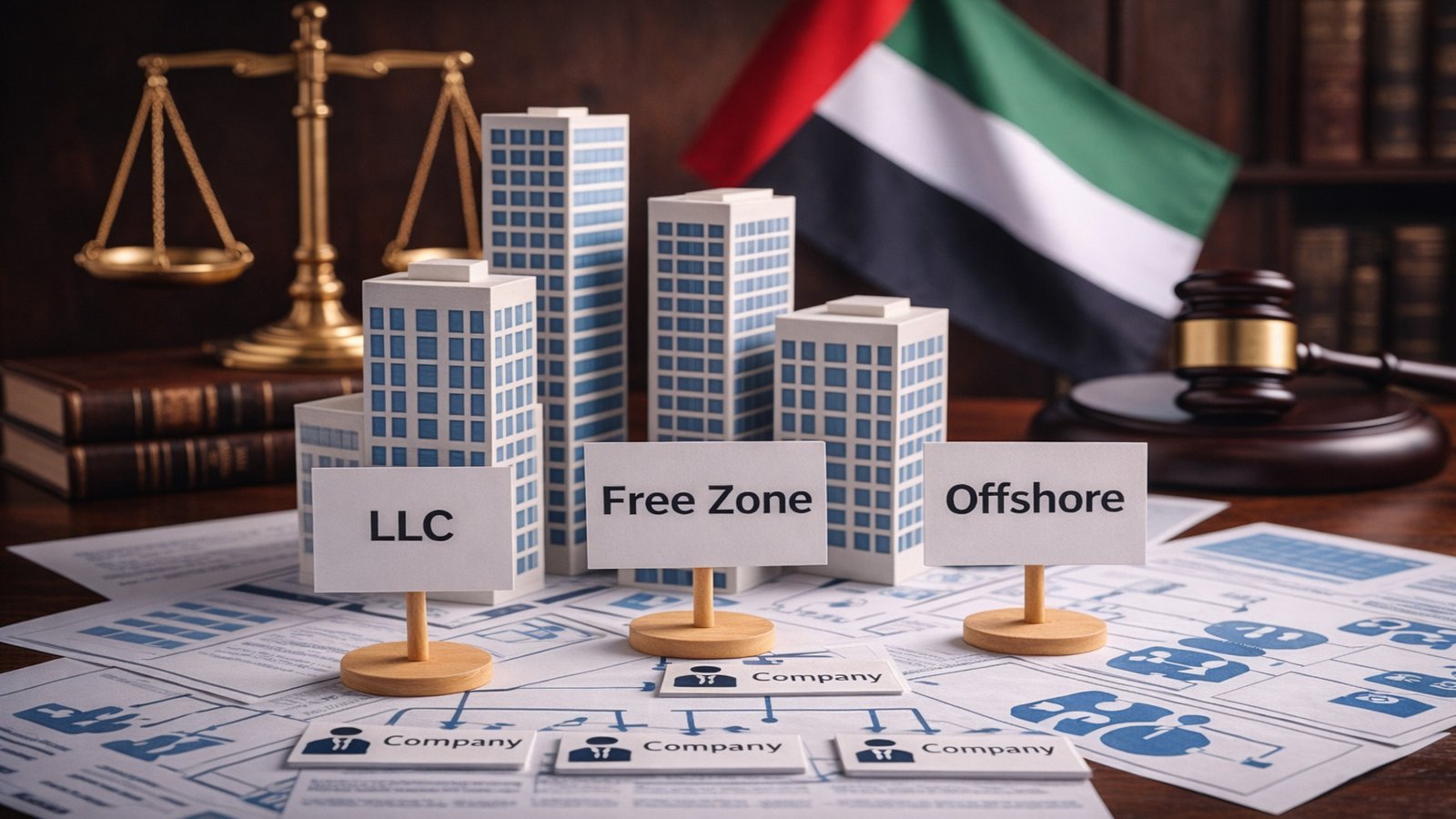
Legal structures typically include mainland entities, free zone entities, or offshore structures. Common forms include Limited Liability Companies (LLCs), branches of UAE or foreign companies, sole proprietorships, and civil companies.
Mainland Setup: Requires licensing from the emirate’s economic department and health authority approval. For example, Dubai mainland requires a license from the Dubai Department of Economy and Tourism (DET) and DHA approval.
Abu Dhabi requires licensing from the Abu Dhabi Department of Economic Development (ADDED) and DOH approval. Mainland entities can conduct business throughout the UAE but require local sponsorship for certain ownership structures.
Free Zone Setup: Offers 100% foreign ownership, modern infrastructure, and regulatory frameworks tailored to healthcare and life sciences.
Recommended free zones include Dubai Silicon Oasis, Dubai Healthcare City (DHCC), and IFZA. Free zones provide flexible workspace or virtual office options and streamlined regulatory processes.
The choice depends on ownership preferences, target market, and operational scope. Free zones suit companies targeting international markets or requiring full foreign ownership, while mainland setups benefit businesses serving the broader UAE market.
What is the Process for Trade Name and Initial Approval?
Apply for name reservation and preliminary approval from the Department of Economic Development (DED) or the applicable free zone authority. The application must observe naming rules and respect UAE naming norms. Activities involving direct medical advice or teleconsultation require additional regulatory approval from the relevant health authority (DHA, DOH, or MOHAP) before proceeding with incorporation.
What Documents Are Required for Setup?
The following documents must be prepared and submitted to the appropriate regulatory authority:
- Memorandum and Articles of Association (MOA/AOA)
- Shareholder and director passports
- Business plan outlining the healthtech activity
- Proof of address or lease agreement
- For branches of foreign companies: board resolution and parent company incorporation certificate
Documentation requirements may vary by jurisdiction and business activity. Licensing conditions differ between mainland and free zone setups, making it advisable to review your setup plan with a digital health lawyer before applying.
As businesses move deeper into digital health operations, many founders rely on a technology law firm and lawyers in UAE to navigate approvals, manage compliance obligations, and ensure their digital health platforms meet all regulatory and cybersecurity standards required by UAE authorities.
Due to the specialised nature of clinical data, telemedicine services, and health tech innovation, companies frequently consult experienced healthcare & life Sciences lawyers who guide them on regulatory classifications, health sector approvals, and emirate-specific digital health rules.
What are the Premises and Licensing Requirements?
Mainland Companies: Must obtain a trade license from the DED and healthcare activity approval from DHA. They must lease approved commercial space. Telehealth platforms must ensure facilities meet DHA technical criteria.
Free Zone Entities: Must obtain a business license from the applicable free zone authority and operational permits for healthcare or IT activities. Free zones like DHCC often provide flexible workspace or virtual office options.
To initiate operations, companies must obtain a Professional or Commercial License under categories such as healthcare technology services, telemedicine services, medical software development, or AI and ML for healthcare.
What Data Protection and Security Requirements Apply?
HealthTech platforms collecting personal health data of UAE residents must comply with the UAE Personal Data Protection Law and the law on information and communication technology in health fields. Specific requirements include:
- Health data must be hosted or stored on servers located within the UAE
- Encryption, access control, and secure cloud storage for patient information
- Cross-border transfers of health data permitted only under specified circumstances
- Data breach reporting protocols must be in place
If your platform collects data from EU residents, General Data Protection Regulation (GDPR) obligations apply regardless of business location. You must assess whether GDPR applies to your processing (offering services to EU residents or monitoring their behaviour) and align with GDPR requirements including lawful basis for processing, data subject rights, and potentially appointing a Data Protection Officer (DPO) and performing a Data Protection Impact Assessment (DPIA).
Key Takeaways
Launching a healthtech platform in the UAE requires careful navigation of a multi-layered regulatory framework. The choice of jurisdiction and legal structure significantly impacts licensing requirements, operational flexibility, and compliance obligations.
Key considerations include selecting the appropriate regulator and jurisdiction, complying with data protection laws requiring UAE-based server storage, integrating with emirate-specific electronic medical record systems for telemedicine platforms, and meeting cybersecurity standards including ISO 27001 and emirate-specific requirements.
Given the complexity of healthcare regulations, telecommunications requirements, and evolving reimbursement frameworks, consulting with a digital health lawyer before launching is essential.
Authors: Shantanu Mukherjee, Alan Baiju , Akshara Nair