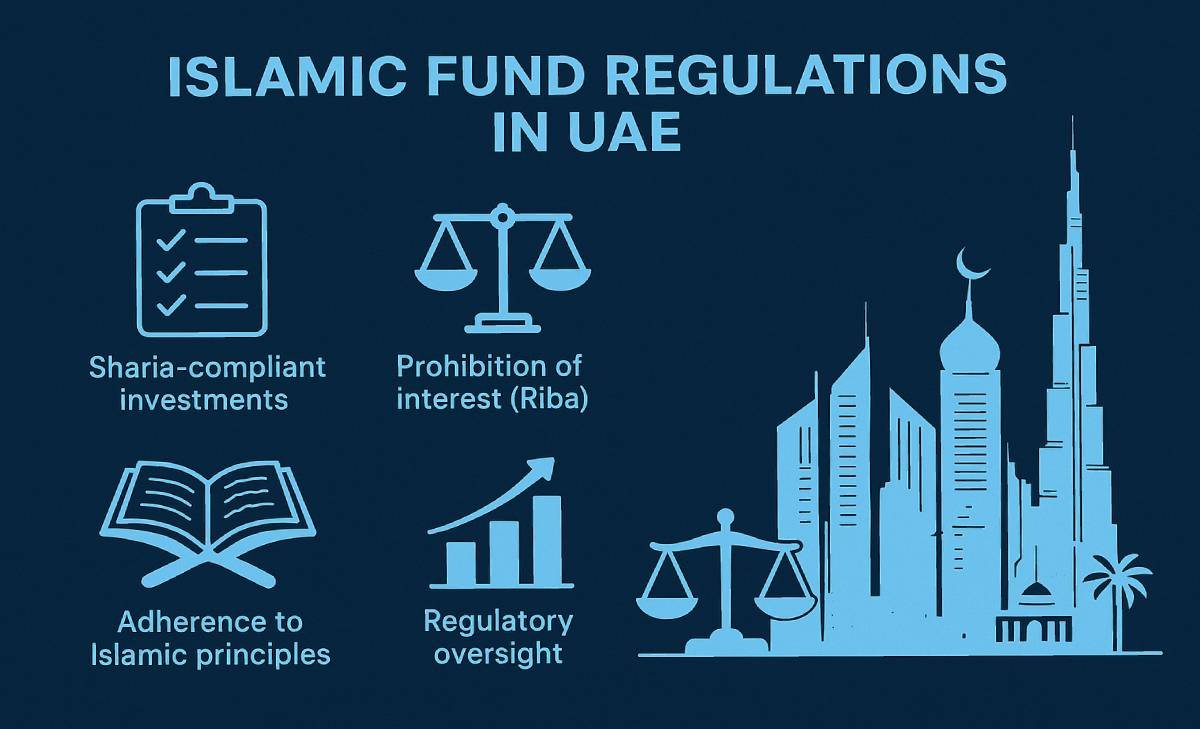
Islamic finance has become a cornerstone of the UAE’s financial sector, reflecting the country’s commitment to providing Shari’a-compliant investment opportunities. Several regulatory bodies in the UAE have set up a legal framework to govern Islamic Finance. These regulations combine international standards with local legal requirements.
Understanding Islamic Funds
An Islamic fund is a collective investment vehicle that operates according to Shari’a principles. Unlike conventional funds, Islamic funds must avoid interest-based transactions (riba), speculative investments (gharar), and non-permissible activities such as alcohol, gambling, or pork-related businesses.
These funds may take various forms, including:
- Equity Funds: Investing in Shari’a-compliant stocks.
- Sukuk Funds: Focused on Shari’a-compliant debt instruments.
- Commodity Funds: Investing in tangible assets like gold or real estate.
- Mixed Funds: Combining multiple asset classes, all compliant with Shari’a principles.
The goal is to provide investors with ethical, transparent, and compliant investment options while delivering competitive returns.
Regulatory Framework for Islamic Funds in UAE
Islamic funds in the UAE are primarily governed through the following authorities:
1. Securities & Commodities Authority (SCA)
Regulates Islamic Finance, and issues sukuks and green sukuks.
2. Central Bank of the UAE
Licenses Islamic banks, banks with Islamic windows, and Islamic finance companies
3. Dubai Financial Services Authority (DFSA)
Regulates Islamic funds within DIFC, ensuring Shari’a compliance, licensing, and governance.
The DFSA has established a comprehensive framework for Islamic funds, covering:
- Fund licensing and registration.
- Appointment of Shari’a boards for compliance oversight.
- Disclosure requirements for investors.
- Risk management and governance standards.
Key Requirements for Fund Managers
Licensing and Registration
Managers must obtain a license from DFSA (for DIFC-based funds) or SCA (for onshore funds). Applications require detailed information on fund strategy, governance, risk management, and investment objectives.
Shari’a Governance
All Islamic funds must establish a Shari’a board composed of qualified scholars. This board reviews investment decisions, fund contracts, and operational procedures to ensure compliance with Shari’a principles. Regular audits by the board are mandatory, and non-compliant activities must be corrected immediately.
Investment Restrictions
Islamic funds are prohibited from investing in companies or activities deemed non-compliant, including:
- Conventional banks and financial institutions that operate on interest.
- Alcohol, tobacco, and gambling industries.
- Speculative transactions or highly leveraged investments.
Disclosure and Reporting
Transparency is a critical requirement. Fund managers must provide detailed reports to investors, including:
- Fund performance and income statements.
- Compliance reports from the Shari’a board.
- Risk assessment summaries and asset allocation details.
Risk Management and Compliance
Islamic funds must maintain a risk management framework that identifies Shari’a compliance risks, financial risks, and operational risks. Independent audits and internal control mechanisms are essential to mitigate these risks effectively.
Types of Islamic Funds in DIFC
The DIFC has become a hub for Shari’a-compliant funds due to its flexible legal framework and international reputation. Common Islamic fund structures include:
- Public Funds
- Exempt Funds, and
- Qualified Investor Funds
Each fund type must comply with DFSA rules on licensing, Shari’a compliance, and investor disclosure.
Step-by-Step Process for Establishing an Islamic Fund
Fund managers need a structured approach to ensure compliance and efficient setup:
Step 1: Feasibility and Planning
Assess market demand, investor profile, and potential Shari’a-compliant assets. This step involves strategic planning, including asset allocation, risk management, and fund lifecycle.
Step 2: Choose Jurisdiction and Structure
Decide whether the fund will be DIFC-based or onshore. DIFC funds benefit from common law governance and international investor confidence, while onshore funds may have access to broader local markets.
Step 3: Appoint Fund Manager and Service Providers
A licensed fund manager is mandatory. Additionally, appoint independent custodians, auditors, and a Shari’a board to oversee compliance.
Step 4: Draft Legal Documentation
Prepare the fund prospectus, trust deed, and management agreements. These documents must clearly outline investment strategy, Shari’a compliance measures, dividend policies, and risk disclosures.
Step 5: Regulatory Submission and Approval
Submit the full application to DFSA or SCA. Expect queries and clarifications before final approval. Regulatory review ensures the fund meets all Shari’a and financial compliance requirements.
Step 6: Fundraising and Launch
After approval, the fund can begin capital raising through private placements or public subscription. Continuous reporting and Shari’a audits remain mandatory.
Step 7: Ongoing Compliance
Regular reporting to regulators and investors is required. Compliance reviews, Shari’a board audits, and financial reporting must be maintained throughout the fund’s lifecycle.
Investor Benefits of Islamic Funds
Islamic funds offer investors several advantages:
- Ethical Investment: Compliance with Shari’a principles ensures ethical and responsible investing.
- Transparency: Clear governance and reporting standards.
- Diversification: Exposure to multiple sectors while avoiding prohibited industries.
- Shari’a Oversight: Independent boards ensure adherence to Islamic principles.
For fund managers, structuring compliant funds opens opportunities to tap into high-net-worth individuals, regional investors, and international capital seeking Shari’a-compliant vehicles.
Challenges for Fund Managers
Despite the benefits, Islamic fund managers must navigate challenges such as:
- Higher operational costs due to Shari’a audits and compliance checks.
- Restrictions on permissible investments, which may limit asset diversification.
- Market volatility and currency risks affecting investor returns.
By engaging professional advisers and maintaining strong compliance procedures, fund managers can mitigate these risks effectively.
Professional Support for Islamic Fund Setup
Given the regulatory complexity, many fund managers rely on professional advisory firms for Fund Formation in UAE. Expert advisers can assist with licensing, Shari’a governance setup, drafting legal documents, and ensuring ongoing regulatory compliance. This streamlines the setup process and builds confidence among investors.
Conclusion
Islamic funds are a critical segment of the UAE’s financial ecosystem. Fund managers who understand Islamic fund regulations in UAE can structure compliant, ethical, and profitable investment vehicles. By following the licensing, Shari’a governance, and reporting requirements, managers can attract investors while ensuring full regulatory compliance. The UAE’s strong legal framework, combined with Shari’a oversight, makes it an attractive destination for both conventional and ethical investment funds.
Author: Shantanu Mukherjee