REGULATING POST-MORTEM AI CLONES: A CLOSER LOOK
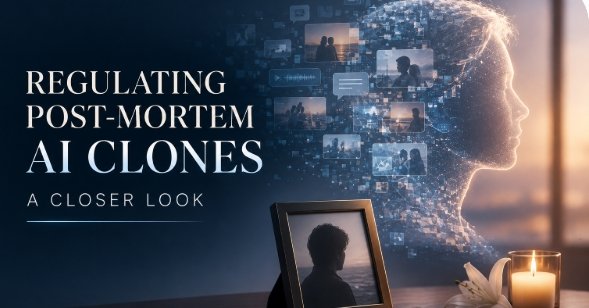
Generative AI has turned a person’s biography, voice recordings and old photographs into raw material for something new: a digital clone that can keep talking long after the person behind it has died. Museums now let visitors converse with recreations of war veterans, and a “grief tech” industry has grown around letting people speak with […]
DATA PROTECTION LAW IN THE UAE : SIX THINGS CHANGING IN 2026

Companies setting up in the UAE usually ask one question: what does UAE data protection law require? The question assumes a single answer, but there isn’t one. In the UAE, a federal privacy law operates alongside separate laws in the financial free zones, health legislation cutting across all of them, and regulator standards carrying practical […]
ARTIFICIAL INTELLIGENCE AND MEDICAL DEVICE REGULATION IN EUROPE: SIX THINGS CHANGING IN 2026
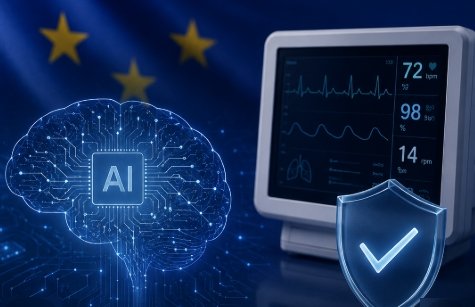
On 27 July 2026, Regulation (EU) 2026/1744, the Digital Omnibus on AI, entered into force. It amends Regulation (EU) 2024/1689, the Artificial Intelligence Act (the “AI Act“), delaying the date on which the AI Act’s strictest rules apply to artificial intelligence inside regulated products, medical devices among them, from 2 August 2027 to 2 August […]
THE LEGALITY OF TRAINING AI MODELS ON COPYRIGHTED MATERIAL IN INDIA: A CLOSER LOOK AT ANI V. OPENAI
On 24 July 2026, the Delhi High Court delivered the first substantive Indian ruling on whether an AI company can copy copyrighted material to train a large language model without a licence. Justice Amit Bansal refused ANI Media’s application for an interim injunction against OpenAI, holding that storing ANI’s news reports to train ChatGPT prima […]
How are Fitness Wearables Regulated in the US?

Fitness wearables have come a long way from the Manpo-Kei or “ten thousand steps” pedometer, which debuted in Tokyo in 1965 as the first-ever wearable health device and the forefather of the personal fitness tracking or ‘biohacking’ industry. Today, the global wearable technology market size is valued at USD 92.9 billion in 2025 and is […]
India’s Top Court Proposes Rules for Use of AI in Courts

Artificial intelligence is already transforming the legal ecosystem, reshaping how lawyers conduct research, assisting courts in managing enormous backlogs, and, worryingly, generating fabricated or unreliable legal citations with disconcerting frequency. India’s Supreme Court has now decided it is time to get ahead of the curve. On June 3, 2026, it published the draft Regulations for […]
UAE Competition Law and Merger Control: A Closer Look

The UAE’s competition regime is centred on Federal Decree-Law No. (36) of 2023 Regarding Regulating Competition, which replaced the earlier 2012 law and modernized the country’s antitrust framework. The law is designed to protect competition, curb monopolistic behaviour, and ensure that market forces remain the main driver of pricing, supply, and consumer choice. It applies […]
The AI Race Meets Labour Law: China Draws a Line on Worker Replacement

In December 2025 and again in April 2026, Chinese courts ruled that employers cannot legally terminate workers simply because artificial intelligence can now perform their jobs more cheaply or efficiently. In the latest case, the Hangzhou Intermediate People’s Court held that a company’s decision to automate a senior quality-assurance role using large language models did […]
How Health Data Localisation Impacts Healthcare Businesses Globally

Data localisation is becoming an increasingly common policy as governments seek to protect sensitive health information, retain control over critical datasets, and ensure that data is governed under national legal frameworks. These aims are legitimate and, particularly in the healthcare context, often well-founded. Health data is among the most sensitive categories of personal information, and […]
AI and Legal Privilege: A Closer Look at United States v. Heppner

SUMMARY If you have been treating your AI tool as a legal advisor, you are courting trouble beyond the well-documented risks of hallucinations and invented citations. A federal court in the Southern District of New York has now ruled that neither the information you share with an AI platform nor the output it generates will […]